
The Debris Offset Market
We delivered a foundational report on the market to the 9th European Conference on Space Debris.
We build the foundations of our future in space

We work with governments, commercial companies and innovators to drive practical solutions for long-term space sustainability — from policy to mission design.
We offer expertise in future scanning, technology roadmapping, regulatory and policy guidance, systems engineering, strategy and business development.
We’re pioneering a market-driven approach to space debris — making removal services financially viable by enabling operators to offset their impact and invest in a cleaner orbit.

We delivered a foundational report on the market to the 9th European Conference on Space Debris.

A study for the UKSA assessing the regulations needed for viable space resource utilisation.
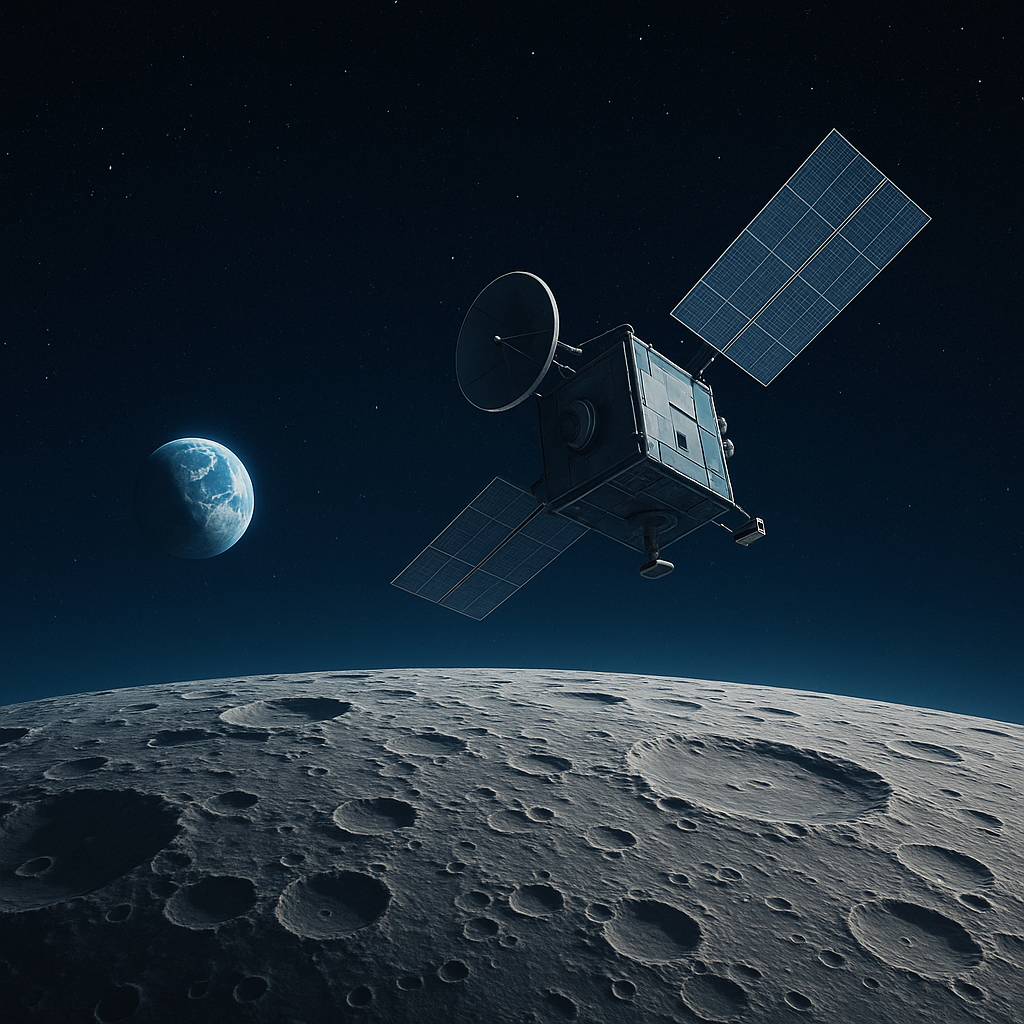
A study for the UKSA to understand the implications of selected satellite disposal methods in cislunar space.

Matthew Wills
CEO

Daniel Beechey
COO

Steve Wills
CFO
For all enquiries, please email:
matt.wills@sustain-space.com
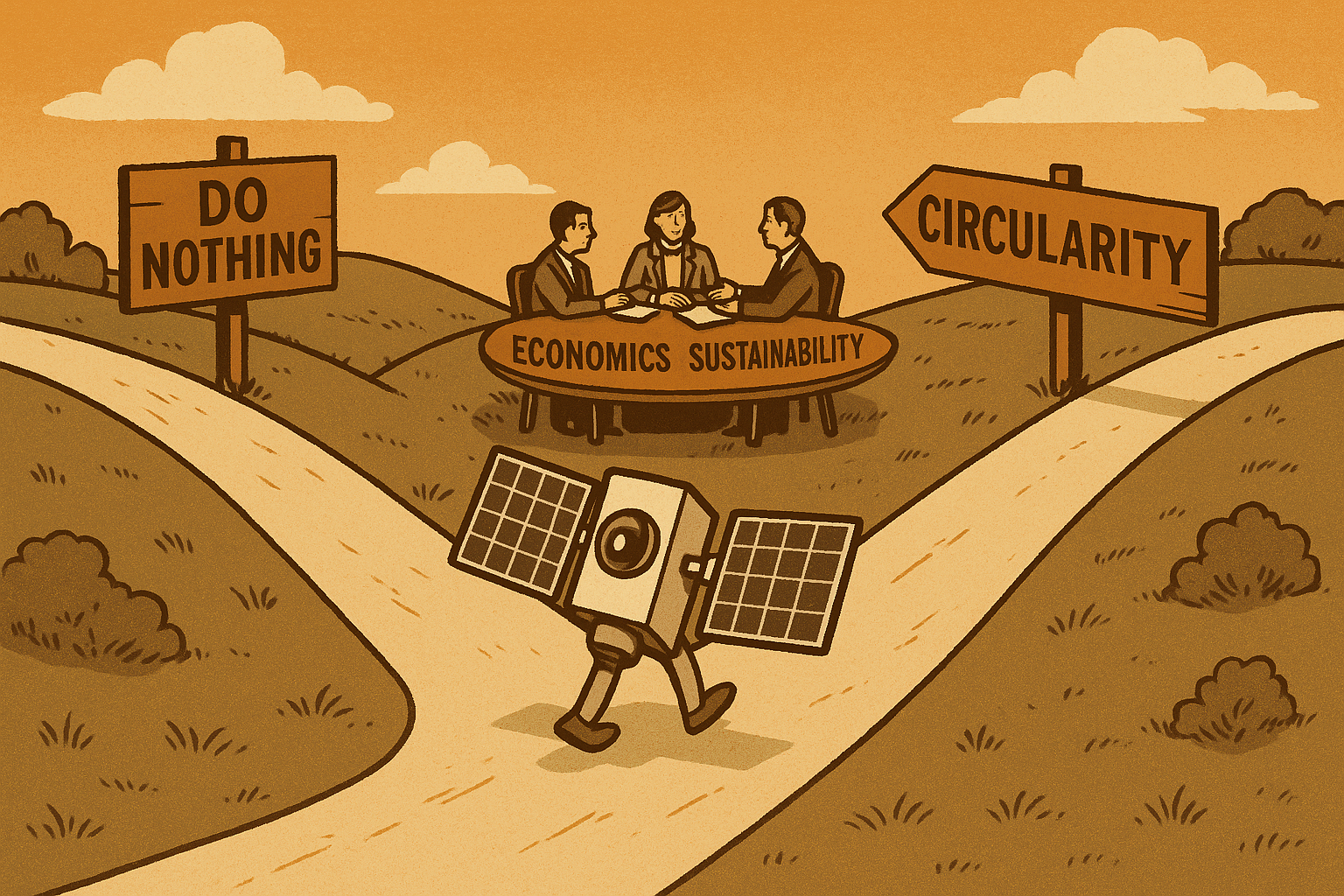
After a few weeks of pulling apart the components, actors, systems, and incentives that might form a circular space economy, it’s time to step back. Not to wrap things up with a neat bow — but to ask a more fundamental question. Is the circular space economy actually a useful concept? Or are we applying…
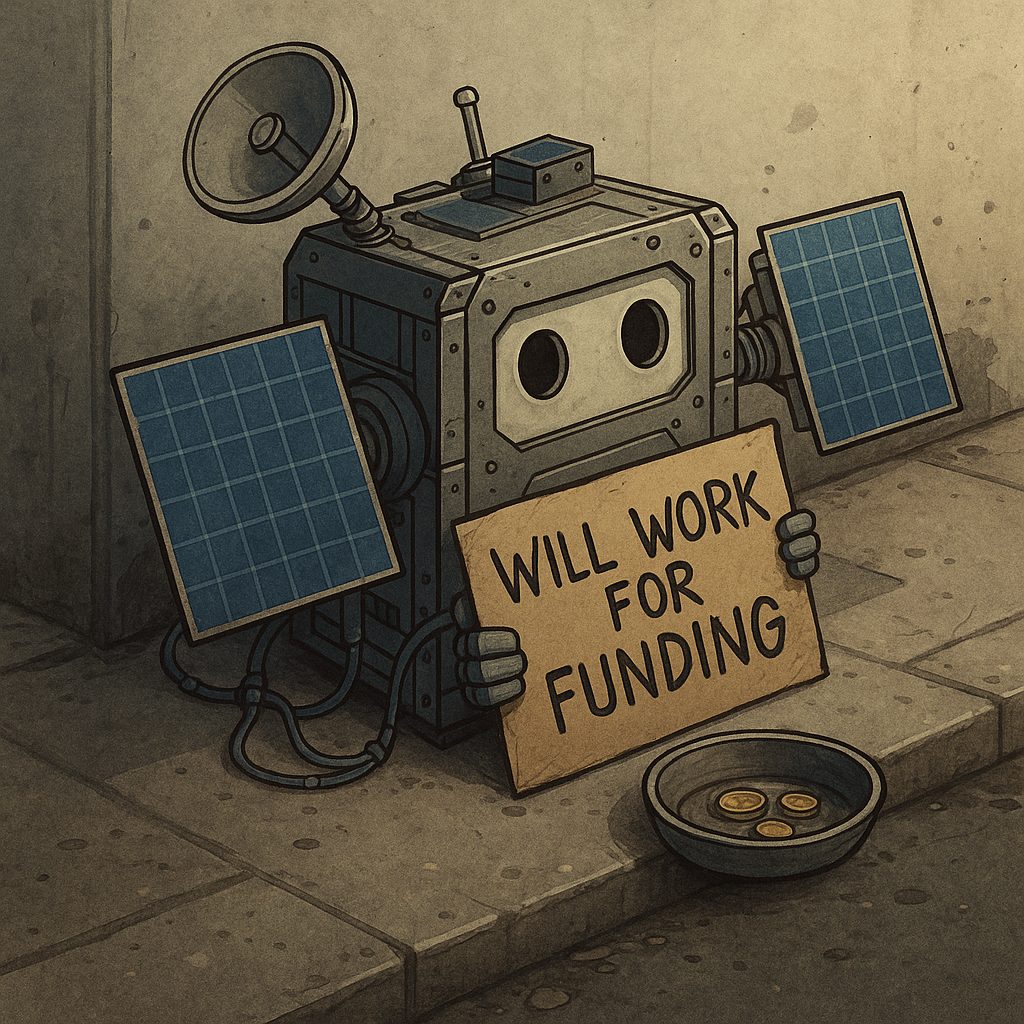
It’s easy to agree that space should be sustainable. It’s harder to make it profitable. For all the talk of orbital recycling, satellite servicing, and debris removal, one question keeps cropping up: who’s going to pay for it — and how? Circularity is not just a technical challenge, but an economic one. On Earth, we’ve…
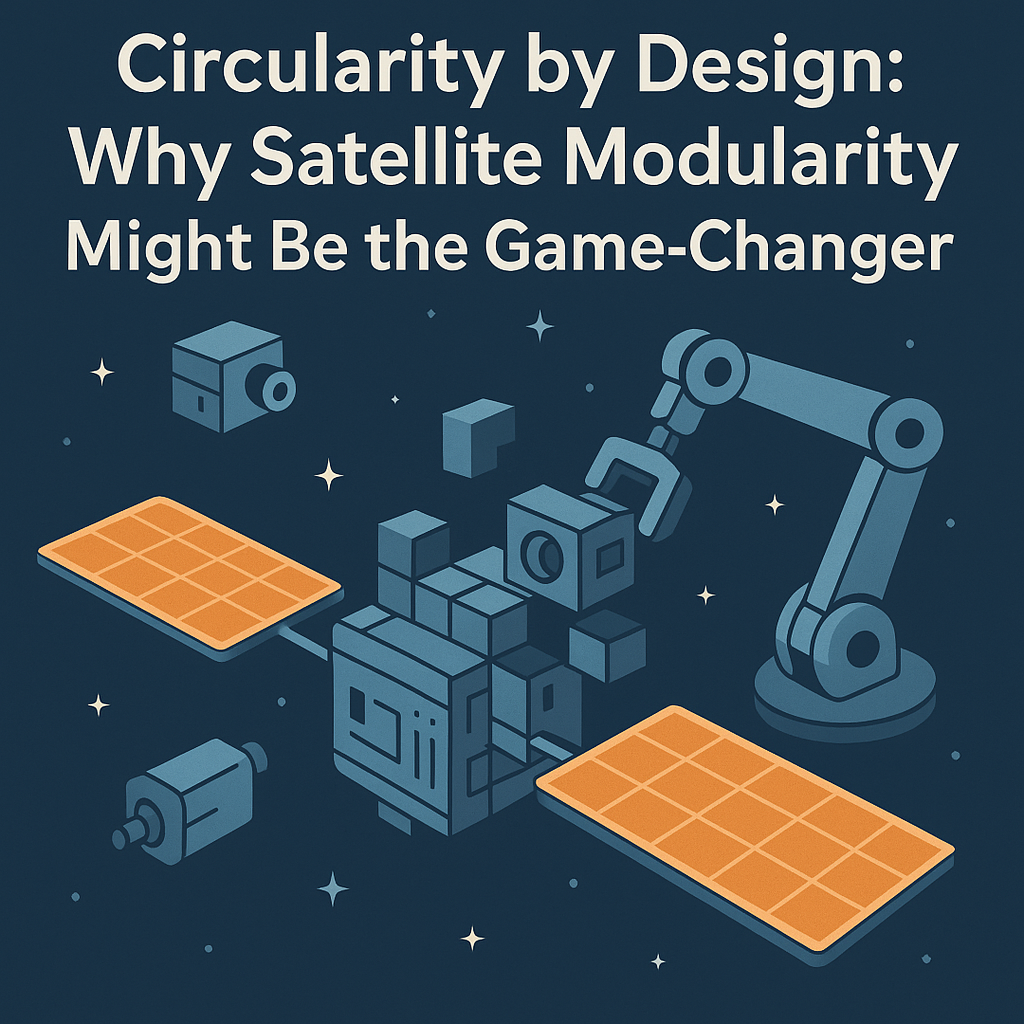
If space is to become a truly circular domain, it won’t happen by chasing down debris with nets or lasers — it will happen upstream, in design choices. One of the most compelling — and most elusive — of those choices is modularity. At its core, modularity means designing satellites not as sealed, single-purpose machines,…

Circular economies aren’t powered by principles alone — they’re powered by people, organisations, and aligned incentives. On Earth, recycling systems rely on designers, regulators, service providers, and material processors to work together. When that coordination fails, even the most well-intentioned circular initiatives tend to stall. In space, where access is costly and every object hurtling…
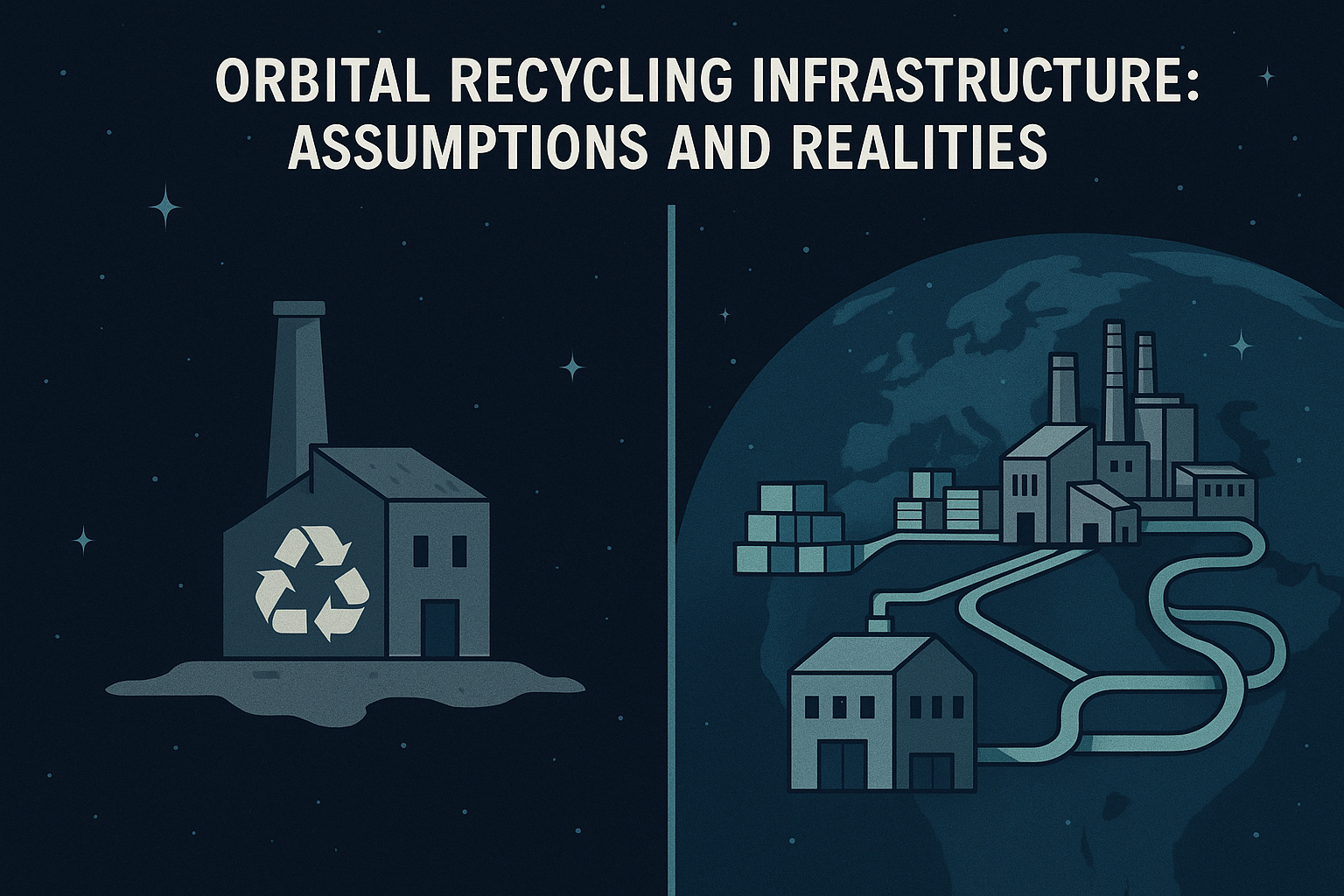
This may seem a slightly controversial post by the title but stick with it. The answer is yes, but… If space is to develop a circular economy, it’s natural to imagine the infrastructure that would support it. One of the most frequently imagined — and most visually compelling — ideas is an orbital recycling station.…
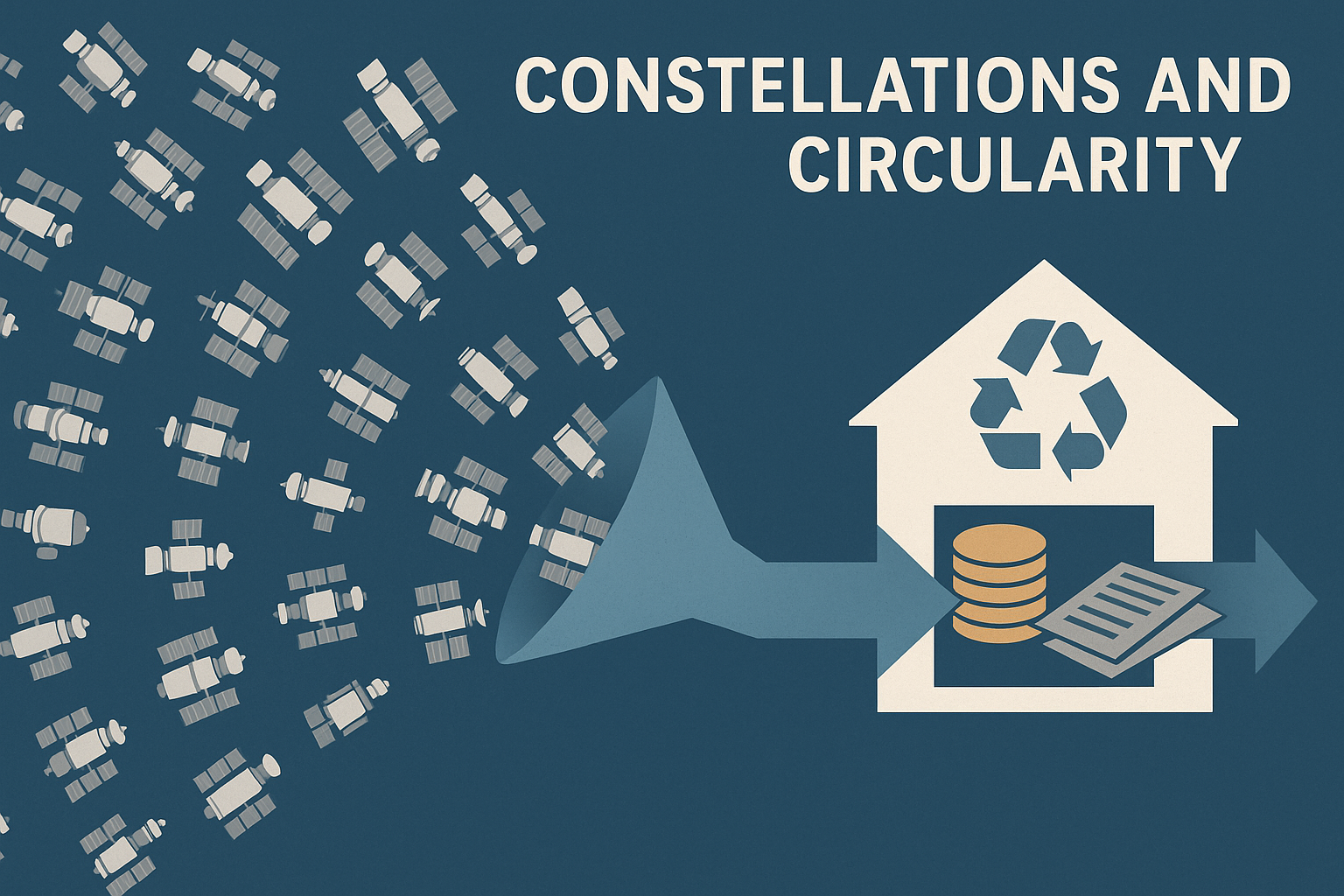
Conversation about circularity in space often returns to the same foundational question: what are we trying to recycle, exactly? While the term might conjure images of defunct satellites or upper stages from long-abandoned missions, the most pressing objects to consider aren’t relics of the past — they’re the small, operational satellites being launched today in…

When we talk about sustainability in space, it’s easy to fall into the trap of thinking about hardware – satellites, rockets, materials. But just as important is the context those systems operate within. Space is not privately owned, nationally enclosed, or governed by a single authority. It is a shared domain – a commons. On…

In the previous posts, I outlined what a circular economy might mean in space, and looked at how Earth-based circular systems in shared domains have developed – or struggled to. Now it’s time to get more specific. If we’re serious about circularity in orbit, we need to look closely at what’s actually up there. Satellites,…
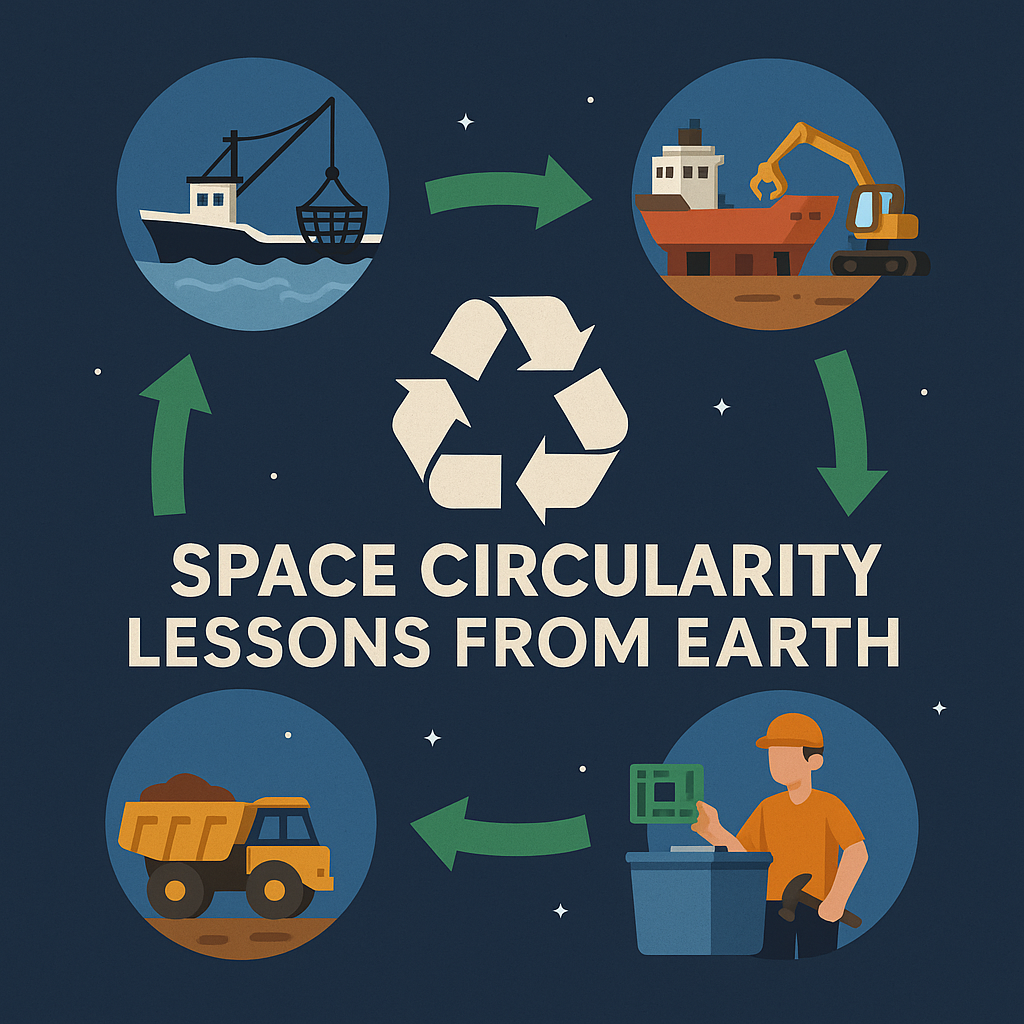
If we want to apply circular economy principles to space, it’s worth looking back to where those principles first gained traction – here on Earth. In recent decades, sectors as diverse as construction, electronics, and even shipping have adopted forms of circular thinking. Not always fully or successfully, but often enough to offer us case…
On Earth, the term “circular economy” has gained traction across industries and policy circles as a framework for reducing waste, conserving resources, and redesigning systems to keep materials in circulation. The model offers an alternative to the traditional linear model of “take, make, dispose”, which generates significant environmental harm and relies heavily on continued access…